



When planning medium-to-low voltage (MV/LV) electrical distribution for an industrial facility, commercial complex, utility network, or renewable energy installation, engineers and project developers must decide between a Prefabricated Compact Substation (CSS) and a Conventional Masonry / Built-in-Place Substation. This decision directly impacts civil construction timelines, footprint, safety certifications, on-site labor risk, and total project expenditure.
It is important to clarify that this comparison concerns secondary distribution substations (typically rated up to 36 kV with transformer ratings up to 2500 kVA or 3150 kVA), distinct from large primary transmission high-voltage switchyards.
What is a Prefabricated Compact Substation (IEC 62271-202)?
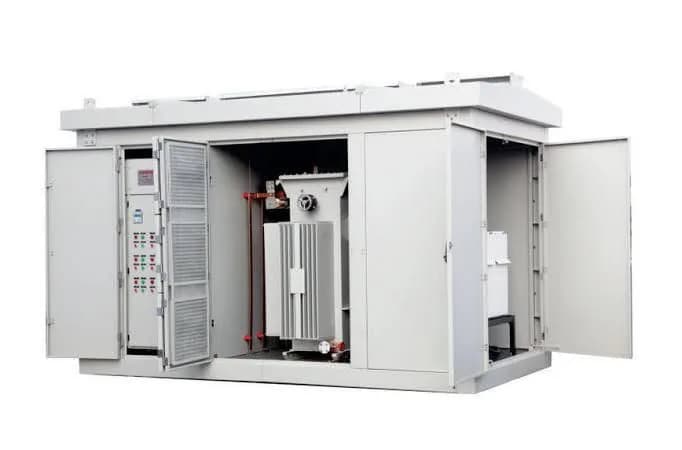
A Prefabricated Compact Substation (also referred to as a Package Substation, Kiosk, or CSS) is a factory-assembled, type-tested enclosure governed by international standard IEC 62271-202. It integrates three core electrical compartments within a single monolithic enclosure (fabricated from sheet steel, sandwich panels, or precast concrete):
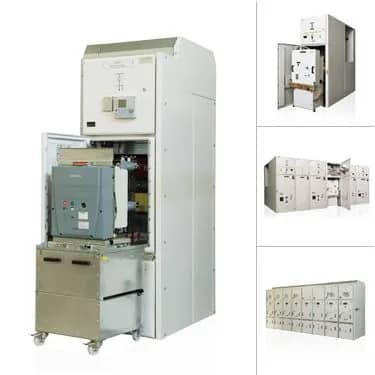
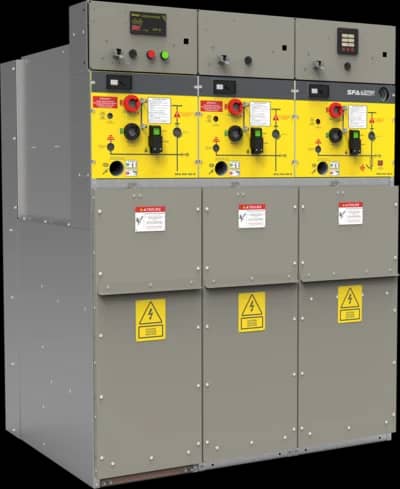
- Medium-Voltage Switchgear CompartmentTypically equipped with an SF6 or SF6-free GIS Ring Main Unit (RMU) or compact AIS switchgear.
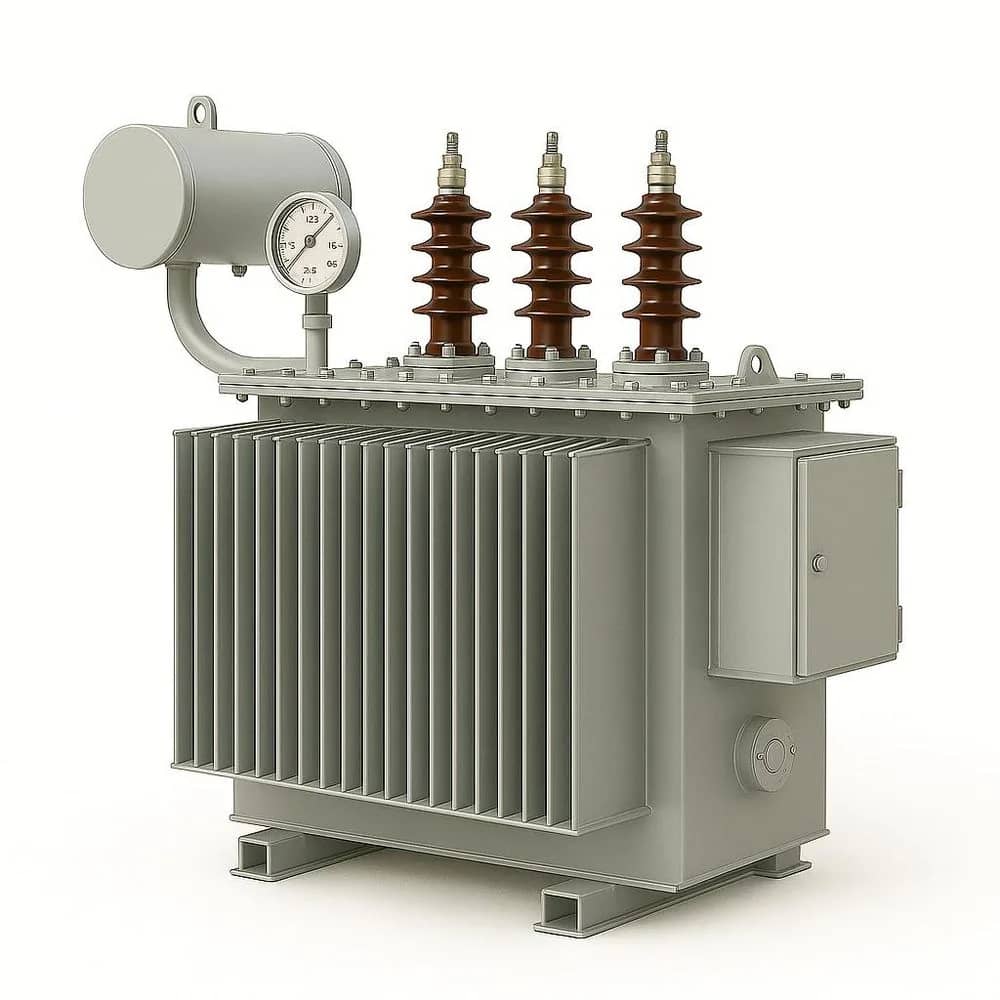
- Transformer CompartmentHouses an oil-immersed distribution transformer or a cast-resin dry-type transformer, complete with thermal ventilation and integrated oil-containment sump.
- Low-Voltage Distribution CompartmentAccommodates incoming circuit breakers, outgoing feeder MCCBs/fused switches, power factor correction, and metering.
- Auxiliary ConnectionsInternal busbars, control wiring, and earthing interconnections, fully pre-assembled and routine-tested at the factory.
What is a Conventional Masonry Substation?
A Conventional Substation consists of a dedicated brick-and-mortar or cast-in-place concrete building erected on site. Electrical components (MV switchgear panels, distribution transformers, LV switchboards, and protection relays) are procured separately, transported as loose equipment, and assembled, interconnected, and cabled inside the building by on-site electrical contractors.
Civil Works, Footprint, and Spatial Requirements
The difference in civil works requirements is one of the most decisive factors in substation selection:
- Compact SubstationRequires minimal civil engineering—typically a single reinforced concrete foundation pad or prefabricated underground cable plinth with integrated oil retention. Total physical footprint is reduced by 50% to 70% compared to a conventional building, making CSS ideal where land area is restricted or expensive.
- Conventional SubstationRequires extensive civil construction, including deep foundations, brickwork or concrete pouring, internal fire-rated partition walls, ventilation louvers, blast relief ducts, and an on-site constructed oil containment basin.
Factory Assembly and Type Testing vs. On-Site Assembly
Under IEC 62271-202, a prefabricated compact substation is type-tested as a complete functional entity. Type tests include internal arc fault classification (IAC-AB up to 20 kA / 1 s, ensuring both operator and general public safety around the enclosure), temperature rise class verification (Class 10, 15, or 20, verifying that enclosure ventilation does not derate transformer lifespan), and mechanical impact resistance (IK10).
In a conventional substation, while individual components (switchgear, transformer, LV board) possess individual type test certificates, the overall assembled installation depends on site workmanship, on-site cable jointing quality, and adherence to ventilation clearances. Verifying internal arc containment and ventilation efficiency across the entire building rests on site engineering supervision.
Project Scheduling, Transport, and Deployment Speed
Prefabricated compact substations decouple civil works from electrical manufacturing. While the foundation slab is prepared on site, the substation is completely assembled and routine-tested in the factory. Once delivered by flatbed truck, a compact substation can be lifted into place by crane, connected to external MV and LV cables, and commissioned within days.
Conversely, a conventional substation follows a sequential schedule: civil excavation, concrete curing, wall construction, roofing, painting, equipment delivery, positioning, internal cabling, and site testing—a process that typically spans several months and is susceptible to weather delays and multi-trade coordination issues.
Maintenance, Accessibility, and Modularity
Maintenance considerations present distinct advantages for each design:
- Conventional SubstationsOffer an expansive walk-in indoor room where maintenance technicians can comfortably inspect equipment, rack out circuit breakers, and work sheltered from weather. Future expansion (e.g. adding an extra MV switchgear panel or LV feeder) is relatively straightforward if spare floor space was planned.
- Compact SubstationsFeature external hinged lockable doors giving direct access to each functional compartment from the outside. Space inside the enclosure is strictly optimized. Modularity allows the entire compact substation to be relocated to a new site if industrial facilities reconfigure, or supplemented with a second adjacent CSS unit.
Typical Applications for Each Solution
- Compact SubstationsIndustrial parks, commercial shopping malls, urban ring distribution networks, solar PV power plants (rapid inverter step-up stations), wind farms, infrastructure works, and temporary mining / construction power.
- Conventional SubstationsHeavy industrial plants with specialized complex protection schemes, very large power transformers exceeding standard CSS thermal ratings, facilities requiring extensive indoor SCADA/control rooms, or installations where architectural municipal building aesthetics must match adjacent architecture.
Comprehensive Comparison: Compact vs. Conventional Substations
| Project Criteria | Prefabricated Compact Substation (CSS) | Conventional Masonry Substation |
|---|---|---|
| Governing Standard | IEC 62271-202 (Type-tested complete assembly) | IEC 62271-200 (MV), IEC 60076 (TX), IEC 61439 (LV) individually |
| Physical Footprint | Very compact; 50% to 70% space reduction | Substantial footprint with dedicated building clearances |
| Civil Engineering Scope | Simple concrete slab or precast foundation plinth | Extensive foundations, masonry, roofing, and oil retention sumps |
| Installation & Commissioning | Delivered pre-assembled; commissioned in 2–5 days | Sequential on-site construction spanning 3–6 months |
| Safety & Arc Classification | Certified IAC-AB (safe for operators and general public) | Depends on architectural design and on-site ventilation execution |
| Thermal Performance | Type-tested enclosure classes (Class 10 / 15 / 20) | Requires custom civil ventilation louvers / forced cooling design |
| Transport & Logistics | Shipped as single monolithic unit via flatbed truck / crane | Equipment delivered as separate loose items into building |
| Relocation & Flexibility | Can be disconnected and relocated to another site | Permanent fixed civil structure; non-relocatable |
| Maintenance Access | Direct external access through locked weatherproof doors | Walk-in indoor room offering generous maintenance workspace |
| Total Project Economics | Predictable factory cost; massive civil labor savings | Higher civil labor expenditure; variable site coordination costs |
Substation Selection Checklist
Project Engineering Evaluation Checklist
Evaluate these key project factors when deciding on your substation architecture:
- Project deployment timeline: Is there an urgent commercial operational date favoring rapid prefabricated deployment?
- Available site footprint: Are land boundaries or real estate costs severely constrained?
- Transformer rating and type: Is the required transformer within standard CSS envelope ratings (typically up to 2500 kVA or 3150 kVA)?
- Site transport and crane access: Can a flatbed transport trailer and mobile crane reach the installation pad?
- Safety environment: Is the substation installed in a public urban area requiring certified IEC 62271-202 IAC-AB public arc protection?
- Future mobility: Will the facility layout change, requiring potential substation relocation?
Evaluating a substation solution for your upcoming project? Discover Imperium's compact and mobile substation solutions, explore our distribution transformer range, or contact our technical consulting team to review your single-line diagram and project specifications via our contact page.
Technical References
- IEC 62271-202: High-voltage switchgear and controlgear – Part 202: High-voltage/low-voltage prefabricated substation. IEC Webstore Standard
- ABB Integrated Secondary Substation (CSS) Solutions and Packaging Engineering Guides. ABB Electrification
- Schneider Electric Prefabricated Substation Application and Thermal Class Calculation Guides.