



Selecting the right medium-voltage (MV) switchgear architecture is a critical engineering decision that dictates substation dimensions, maintenance regimes, environmental resilience, and total lifecycle expenditure. Electrical consultants, EPC contractors, and industrial procurement teams frequently face the choice between Air-Insulated Switchgear (AIS) and Gas-Insulated Switchgear (GIS). While both technologies fulfill the safety and operational standards governed by IEC 62271-200, their design principles, spatial demands, and operating costs differ fundamentally.
Dielectric Insulation vs. Current Interruption
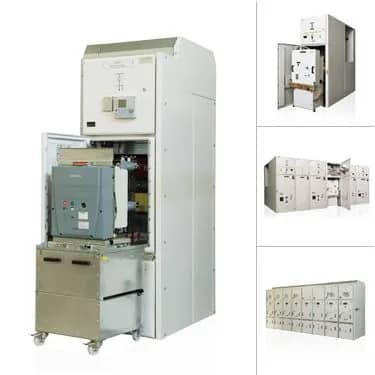
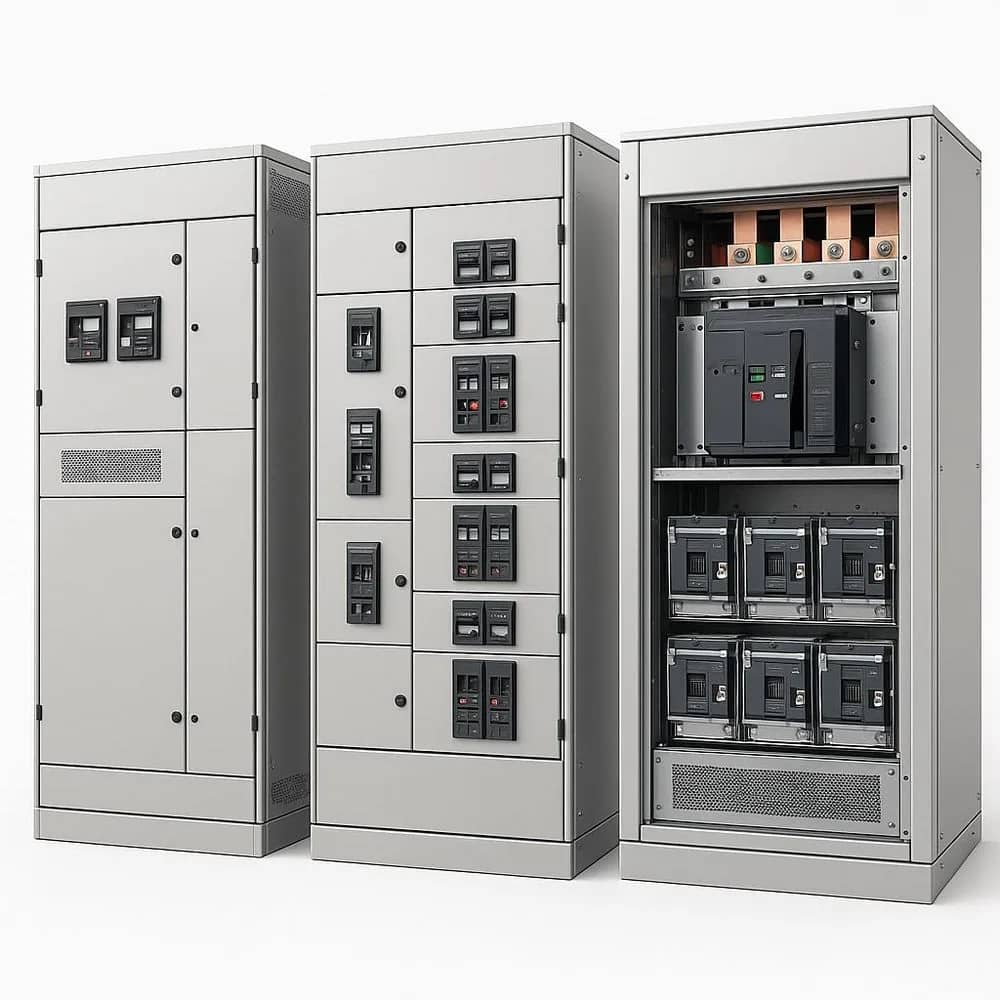
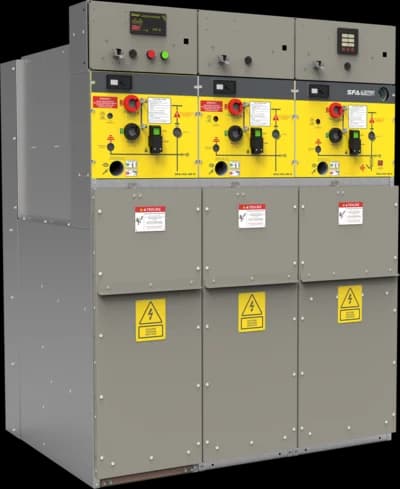
To make an informed selection, engineers must distinguish between the insulating medium and the arc-quenching (interruption) medium. In Air-Insulated Switchgear (AIS), atmospheric air acts as the primary phase-to-phase and phase-to-earth dielectric barrier within the enclosure, while the switching device itself typically employs a sealed vacuum bottle or SF6 interrupter. In Gas-Insulated Switchgear (GIS / GIS RMU), the main busbars, disconnectors, and circuit breaker interrupters are housed inside sealed, pressurized metallic tanks containing an insulating gas.
Historically, sulfur hexafluoride (SF6) has been the predominant dielectric gas in GIS due to its exceptional dielectric strength (approximately 2.5 to 3 times higher than air at atmospheric pressure). However, modern GIS designs increasingly incorporate alternative gases, technical air mixtures, or vacuum interruption with solid insulation to eliminate fluorinated gas usage.
Physical Footprint and Civil Engineering Requirements
Because atmospheric air has a lower dielectric withstand voltage per millimeter than pressurized insulating gas, AIS panels require physical phase clearances in accordance with IEC insulation coordination tables. Consequently, AIS switchgear line-ups require substantial substation floor area and vertical clearance.
GIS achieves a 60% to 75% reduction in physical footprint compared to equivalent AIS switchgear. This footprint reduction is decisive for urban distribution substations, offshore platforms, underground facilities, and containerized modular substations where real estate costs or spatial boundaries make standard electrical rooms unfeasible.
Environmental Protection and Operating Conditions
Environmental exposure plays a decisive role in long-term reliability. In AIS panels, although metal partitions and louvers provide enclosure protection (typically IP3X or IP4X), ambient air circulates across busbars, cable terminations, and support insulators. Exposure to airborne humidity, salinity, cement dust, chemical vapors, or high altitude (which reduces atmospheric dielectric breakdown voltage) requires oversized clearances, anti-condensation space heaters, or regular de-energization for cleaning.
In GIS systems, the primary high-voltage conductors and switching mechanisms reside in hermetically sealed stainless steel tanks rated IP65 to IP67. This complete isolation protects internal components from ambient humidity, dust, vermin, corrosive gases, and altitude variations, making GIS the reference choice for heavy industrial plants, coastal installations, and desert substations.
Maintenance, Service Continuity and Operator Safety
Both switchgear types must comply with IEC 62271-200 for internal arc classification (IAC AFLR up to 40 kA / 1 s) and Loss of Service Continuity (LSC). However, their operational maintenance workflows differ:
- AIS MaintenanceStandard withdrawable circuit breaker trucks can be racked out onto the aisle floor for mechanical inspection, lubrication, and contact testing without specialized gas handling tools. However, busbar compartments and cable compartments require routine thermal imaging and periodic cleaning.
- GIS MaintenanceThe primary gas vessel is designed as a sealed-for-life compartment, eliminating routine maintenance on conductors, disconnectors, and busbars for 30+ years. External operating mechanisms and protection relays still require routine functional checks, and any internal fault or modification requires certified gas evacuation and filling equipment.
Initial Capital Expenditure vs. Total Lifecycle Cost
Initial equipment acquisition cost (CAPEX) for AIS is generally lower than GIS at 12 kV and 24 kV. However, total project economics depend heavily on civil building costs, land acquisition, installation speed, and operational downtime. In projects where building a large civil substation room is costly, the reduced civil works required for compact GIS can offset the higher initial equipment cost.
Environmental Frameworks: EU F-Gas and International Markets
Regulatory frameworks regarding fluorinated greenhouse gases are actively reshaping switchgear procurement. Under the European Union F-gas Regulation (Regulation (EU) 2024/573), the placement on the EU market of new medium-voltage electrical switchgear using SF6 is subject to phased bans: up to 24 kV by 2026, and up to 145 kV by 2030, where validated alternatives exist.
In contrast, international markets across Africa, Central Asia, and the Middle East continue to utilize proven SF6-insulated GIS and RMU systems alongside AIS for secondary distribution, while progressively evaluating SF6-free eco-gas options. Specifiers must always account for local environmental regulations, end-of-life disposal protocols, and gas-handling certification in their target jurisdiction.
Selection Considerations by Voltage Rating (12 kV, 24 kV, 36 kV)
- 12 kV NetworksAIS is standard and economical for industrial distribution, motor control centers, and utility substations. GIS is reserved for space-constrained basements, packaged substations, or aggressive environments.
- 24 kV NetworksBoth AIS and GIS compete directly. GIS is widely preferred in compact urban secondary ring networks (RMUs) and renewable energy collection substations.
- 36 kV / 40.5 kV NetworksAIS panels become physically large and heavy to maintain necessary air clearances. GIS becomes increasingly competitive technically and commercially due to dramatic space and civil savings.
Technical Comparison: AIS vs. GIS Switchgear
| Design Criteria | Air-Insulated Switchgear (AIS) | Gas-Insulated Switchgear (GIS) |
|---|---|---|
| Insulation Medium | Atmospheric air (SF6-free) | Sealed SF6 gas, synthetic air or eco-gas mixtures |
| Interruption Technology | Vacuum or SF6 circuit breakers | Vacuum or SF6 circuit breakers in sealed vessel |
| Physical Footprint | Standard footprint; requires larger air clearances | Compact footprint (60% to 75% smaller than AIS) |
| Substation Civil Works | Larger civil room dimensions and ceiling height | Reduced building volume and foundation requirements |
| Operating Environment | Requires clean, dry indoor environment | Immune to humidity, dust, salinity, and altitude derating |
| Maintenance Requirements | Accessible withdrawable trucks; periodic cleaning needed | Primary vessel sealed-for-life; external mechanism checks |
| Service Continuity Class | LSC2B (metal-clad withdrawable) or LSC2A | LSC2A / LSC2B depending on multi-compartment design |
| Applicable Standards | IEC 62271-200, IEC 62271-1, IEC 62271-100 | IEC 62271-200, IEC 62271-1, IEC 62271-102 |
| Future Expansion | Straightforward busbar extension on site | Requires compatible plug-in busbar connectors or factory matching |
| Regulatory Status | No fluorinated gas restrictions worldwide | Subject to EU F-gas phase-outs; regulated gas handling in EU |
Selection Checklist for Project Engineers
Pre-Specification Engineering Checklist
Before issuing an inquiry or tender for MV switchgear, verify these key project parameters:
- Rated voltage (12 kV, 24 kV, 36 kV, 40.5 kV) and required power-frequency / lightning impulse withstand levels.
- Rated normal current (630 A to 4000 A) and short-circuit withstand capacity (e.g. 25 kA / 1 s, 31.5 kA / 3 s, 40 kA / 1 s).
- Available switchgear room footprint, door opening dimensions, and ceiling height.
- Ambient conditions: installation altitude above sea level, temperature extremes, coastal salinity, or chemical contamination.
- Target Loss of Service Continuity (LSC2A vs. LSC2B) and Internal Arc Classification (IAC AFLR).
- Regional environmental compliance requirements regarding fluorinated greenhouse gases.
Planning a medium-voltage distribution project? Explore Imperium's MV switchgear solutions or consult our technical consulting team to evaluate your single-line diagram and receive a tailored technical and commercial proposal via our contact page.
Technical References
- IEC 62271-200: High-voltage switchgear and controlgear – Part 200: AC metal-enclosed switchgear and controlgear for rated voltages above 1 kV and up to and including 52 kV. IEC Webstore Standard
- Schneider Electric Medium-Voltage Switchgear Engineering Guides. Schneider Electric Knowledge Center
- Regulation (EU) 2024/573 of the European Parliament and of the Council on fluorinated greenhouse gases (EU F-gas framework).